Cheat Takes Over The West
By Heather Knight
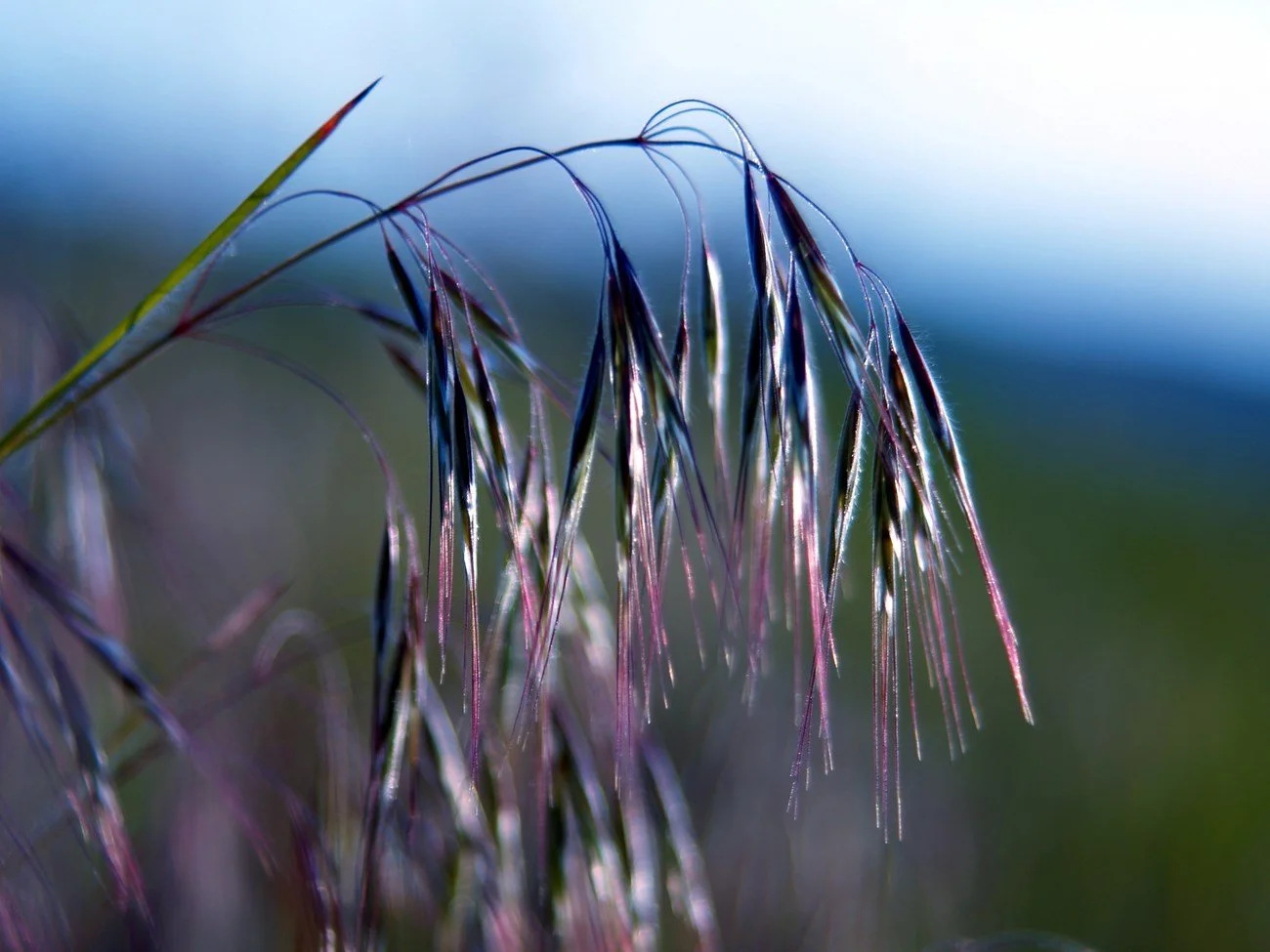
Cheatgrass (Bromus tectorum)
In 1941, Aldo Leopold, wrote about the spread of cheatgrass in his essay “Cheat Takes Over”. This issue has remained a horny challenge for conservationists until now.
Cheatgrass (Bromus tectorum) is said to have been named by early twentieth-century farmers who felt "cheated" when the invasive weed invaded wheat fields, reducing crop yields and quality. It was called cheatgrass because it looks similar to young wheat but provides little economic value, effectively stealing nutrients and water from cultivated crops. Ranchers have also felt “cheated” by the grass, because the lush green expanses are only palatable for a short duration, have little nutritional value, and sharp seeds cause irritation.
Cheatgrass originated in Europe or Eurasia and was introduced to the U.S. in the mid- to late-1800s as a contaminant in seed and straw. It is a winter annual, meaning it typically germinates in late summer and fall, continues root development over the winter and exploits soil moisture and nutrients before desirable plant communities begin active growth in the spring.
This opportunistic growth cycle allows cheat to outcompete desirable native grasses, forbs and shrubs. It’s very fine structure, tends to accumulate dense litter that dries completely in early summer and acts as a dense seedbed. The thatched layer creates a continuous layer of flammable fine fuel that increases wildfire frequency. Desirable perennial species can be killed or never have a chance to fully recover because of the increased fire frequency.
Taken altogether, cheatgrass results in reduced forage quantity and quality for livestock and wildlife, and higher wildfire risk for people, their property and livelihoods and for wildlife. Total range infestations have been estimated between 50 million and 100 million acres.
Land managers have attempted control cheatgrass using a combination of practices; early grazing or mowing, prescribed fire, and native seeding. However, cheatgrass is highly adapted. When mowed or grazed, it can quickly regrow and set seed multiple times under warm and moist conditions. It survives or is stimulated by frequent cool fires, while hotter fires can kill cheatgrass and its seed bed but often negatively impact native species.
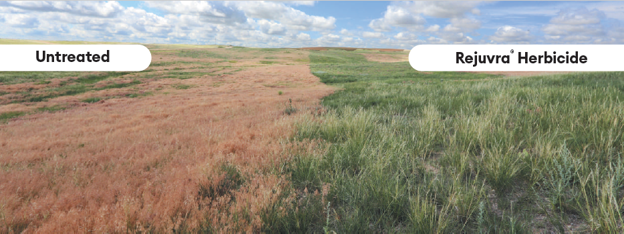
Finally, we have hope. Researchers at Colorado State University published studies in 2016 and 2017 indicating high sensitivity of cheatgrass to a herbicide called Rejuvra™ (active ingredient indaziflam). After lengthy field testing, today Rejuvra® herbicide is now labeled for the restoration and protection of rangelands, natural areas, parks and open space, wildlife management areas, recreational areas, fire rehabilitation areas, prairies and fire breaks, and any of these sites that are grazed or cut for hay.
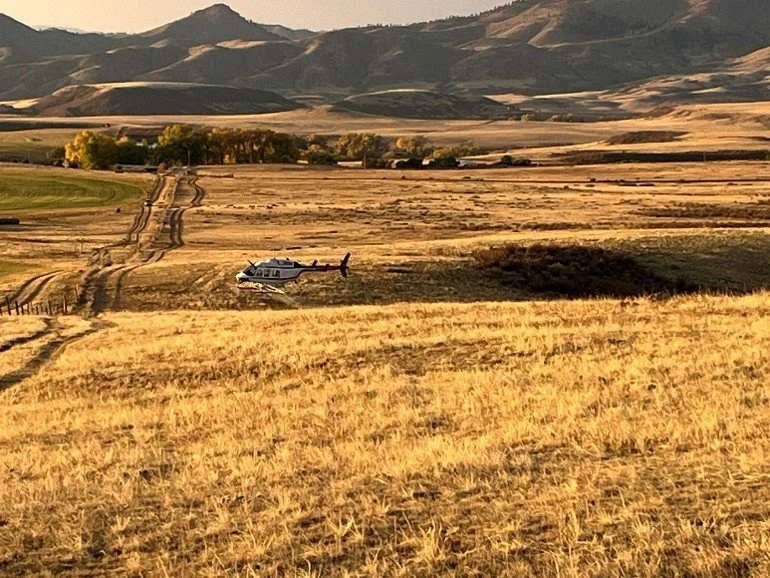
In the fall of 2023, a diverse group of interested landowners and conservation partners convened to discuss landscape scale conservation and ranch sustainability projects in the North Fork of the Poudre watershed. Stakeholders included private landowners, Colorado Parks and Wildlife, the Larimer Conservation District, Colorado State Land Board, The Nature Conservancy, Colorado Open Lands, Natural Resources Conservation Service and Envu Range & Pasture. The group identified the following goals: 1) Improve Bighorn Sheep Production, Winter and Migration Habitats, 2) Improve mule deer winter habitat, 3) Improve elk production and winter habitats, 4) Improve regional movements of big game species, 5) Improve riparian habitat for Preble’s meadow jumping mouse and 6) Foster ranch sustainability.
The group identified cheatgrass as the key factor affecting habitat quality for wildlife and ranching economies. A pilot project centered around the Calloway Rim was selected with the idea that if successful, a larger initiative could be considered in northern Larimer County. The pilot project area included approximately 8,900 acres. Funding was acquired and the first treatments occurred on State Wildlife Area lands and private lands in the fall of 2024. Vegetation monitoring post treatment has showed significant reductions on cheatgrass and positive responses in native grasses, forbs and shrubs, even during drought years. Further treatments are planned as funding is available.
