Thanks to the Busy Beaver - Stream Engineers and Healers
By Nate Boschman and Nick Hagen
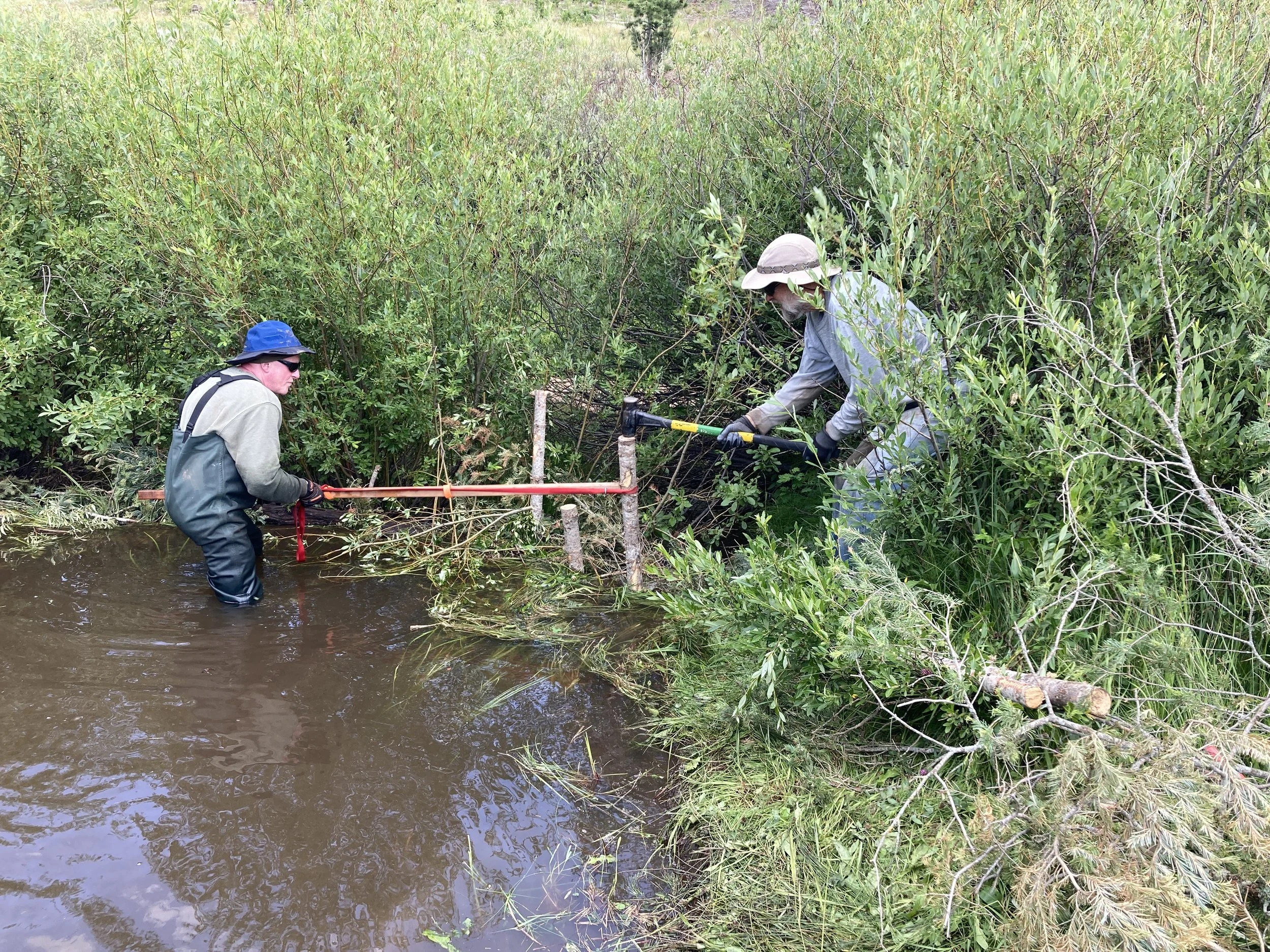
“Low-tech” Process-Based Restoration (LTPBR) structures can be built by hand with locally cut timber, willows, and wetland sod (Photo credit: Wildlands Restoration Volunteers).
Before beaver were trapped to near extinction, they occupied most low-gradient streams and played a formative role in the landscapes as we know them in the Mountain West. Our glacially cut mountain valleys owe their wide floodplains and deep soils to the stabilizing efforts of these industrious critters. In their absence, the streamside vegetation that forms and holds those soils has retreated. Streams have eroded downward, draining the surrounding soils, leaving them incapable of supporting all but the most xeric plants. These dry expanses no longer provide barriers to forest fires and are vulnerable to erosion from increasingly storm-driven precipitation patterns. Many lower altitude streams that once flowed year-round, fed by the slow release of moisture from thousands of wet meadows, now dry up as soon as the snow has melted from the peaks and only convey the occasional flashy flows during a storm.
Some might say...so much the better... let's get that water down to the high-plains farms and cities that need it ASAP! Why let those useless cottonwoods "use up" all of our water? This argument has long gotten a pass while there have been reliable snowpacks that persist and feed streams through the summer. As the climate becomes warmer, snow becomes less reliable and high-intensity storms become more common, trying to hold that water in hot, windy, increasingly sediment filled, low-altitude reservoirs is becoming less viable and the truth of the matter is becoming all too apparent: We need our beavers back.
That's easier said than done! Beavers are recovering in the few places where there is still enough vegetation for them to work with, but in the places that need them the most, there is often nothing left for them, not even water. Bringing them back in time to help buffer us from the looming water crisis will take some effort and the answer is surprisingly simple: We do their work for them until the landscape is ready for them to take the next shift.
Beaver Dam Analogs (BDAs) mimic the stabilizing effect of beaver dams
Post Assisted Log Structures (PALs) disrupt the erosive energy of fast water
Induced Meanders (IMs) redirect straight, fast, erosive creeks into stable meanders
All of these “low-Tech” Process-Based Restoration (LTPBR) structures can be built by hand with locally cut timber, willows, and wetland sod (see photo above). With periodic maintenance, existing stands of struggling willows can recover in a few seasons, making them capable of hosting beaver once again.
The other challenge is that many of the wide flat landscapes that beavers made possible have been the very thing settlers were looking for when we arrived. Why build a house or cut a road up high in a side slope when there is a perfect flat spot down there by the creek? And so build, we did.
The west was “settled” in the decades following the heyday of the fur trade in the early 19th Century and although resilient, beavers were still absent in many drainages into the industrial revolution. It was in this drastically altered landscape that we built our infrastructure and in doing so, inadvertently positioned ourselves to be at odds with the beaver upon their return. When they began to rebound, at times with the assistance of humans, their activities were new and alarming- to many in the west who had come to know a landscape devoid of this keystone species. Even today, right here in Northern Colorado, many drainages have been lacking beavers until very recently. Their sudden appearance is no less jarring than in generations past.
A tree felled across a yard, a culvert plugged at the railroad crossing, a road flooded from a dam in the creek, these are all real issues that can drive otherwise civilized, well-mannered folks into dam-and-hair-pulling lunatics. When they discover the impoundment they had cleared the evening prior is now not only back, but built up twice as big as before! While this may be amusing for those without the flat-tailed neighbor, the impact can still be felt indirectly in the form of higher infrastructure costs, higher maintenance fees, increased insurance premiums and longer wait times during road construction. We can’t simply move all our roads, houses, municipalities up out of the reach of beavers.
So what’s a person to do??? “Beaver coexistence” is a catch-all phrase encompassing various non-lethal beaver damage mitigation methods and techniques including flow devices:
Pond Levelers "Beaver Deceivers" reduce the ponding behind dams
Exclusion Fencing protect culverts and diversions.
Tree protection chicken wire and sandpaint preserve desirable trees.
Each one of these practices has been proven to be effective in the majority of conflicts when executed properly. Beaver coexistence has also been shown to cost less than lethal removal over a three year timespan*. While not fancy or flashy, beaver coexistence has allowed many a beaver to remain in the watershed, providing all the ecological services that benefit both wildlife and humans. As its popularity grows, however, we must be careful in our application and expectations as improper beaver coex technique and/or installation can potentially do damage to the reputation of this still-fledgling practice. When untrained and/or inexperienced people attempt to build on their own, installations often fail or function abnormally, which then leads to them and others to abandon the practice or even actively campaign against it. Understanding both functionality and limitation is key to successful builds, successful beavers and a peaceful coexistence.
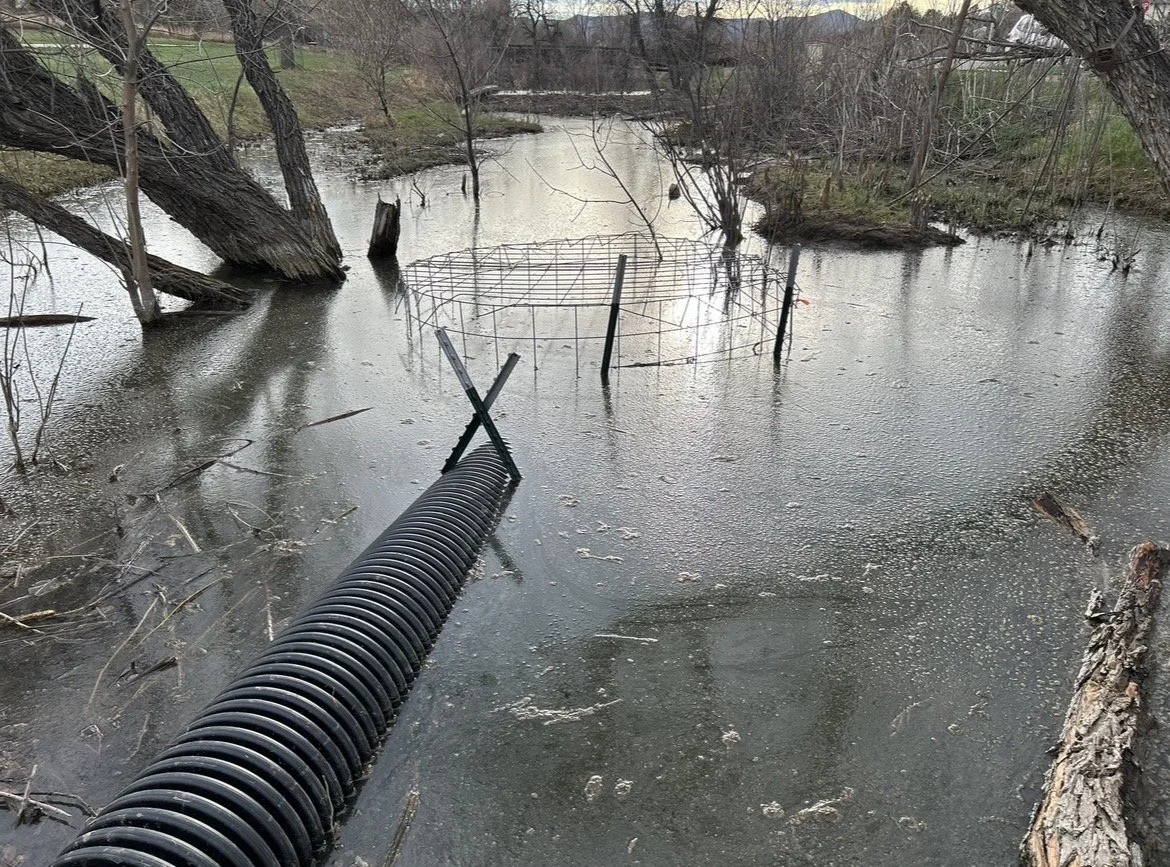
A pond leveler installed by Songdog Outdoor Services, LLC in Littleton, CO.
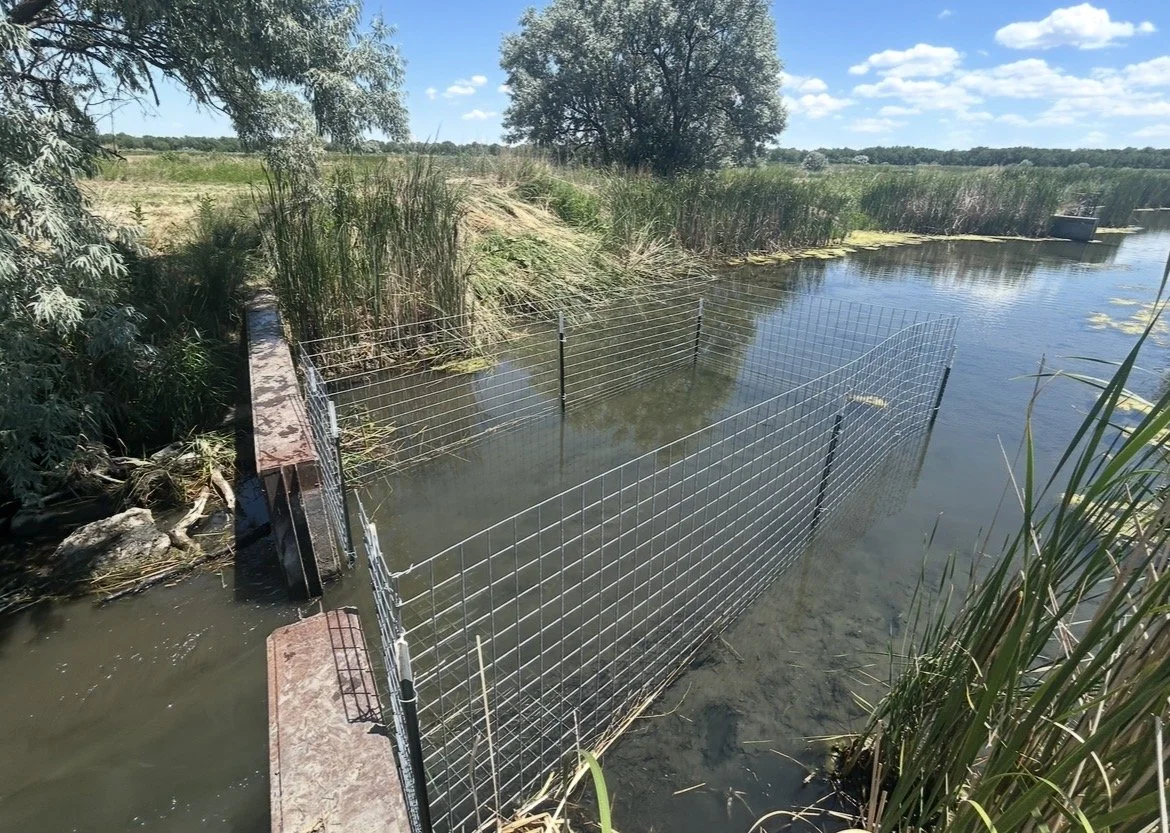
Exclusion fencing installed by Nick Hagan and Colorado Parks and Wildlife at Elliot SWA.
It’s been a long journey for western beavers: from the beating heart of the arid west, to the focused eradication of the 1800’s, to modern costly nuisance, to climate resilience superstar, beavers continue to hold on and even thrive under the right conditions. As we continue to develop the land and allocate our precious water, we would be wise to consider the humble beaver-for just as the beaver shaped the landscape, so too may they shape the future.
*Billerup Study published by Beaver Institute, Southampton, MA
Nate Boschmann is Program Director at Wildlands Restoration Volunteers with 20 years of LTPBR experience - wrv.org
Nick Hagen is a Beaver institute certified practitioner and operates Songdog Outdoor Services. - songdogoutdoorservices@gmail.com
